


.avif)
Choosing Between Cloud & Desktop Accounting Software in 2023
Planning to revamp your accounting firm's tech stack? Let's compare cloud vs desktop solutions, so you can choose the best tool and upgrade your practice.


Discover how automated accounting solutions can transform your bookkeeping and financial management. Learn about the key features, benefits, and top tools to help you choose the right platform for your firm.
Managing finances manually is time-consuming, error-prone, and hard to scale. Automated accounting solutions use AI to handle repetitive tasks, giving your team more time to focus on what actually matters: strategic advice and client growth.
In this article
Did you know you can automate almost 75% of your accounting tasks?
But not all automated accounting solutions are created equal. To get accurate results and reliable reports, you need the right one for your firm.
In this article, we'll explain what these solutions are and how they can help. Plus, we've reviewed 5 of our favorite tools to help you choose.
An automated accounting solution is software designed to handle your accounting tasks and financial processes using AI.
Instead of spending hours on data entry, invoice processing, bank reconciliations, and financial reporting, your tools take care of it with minimal human input and a much lower risk of error.
That said, these tools are only as good as the data you feed them. Accuracy in, accuracy out.
AI in accounting automates these workflows so your team can reduce errors, save time, improve accuracy, and stay compliant with financial regulations. And because most solutions are cloud-based, you get real-time access to financial data from anywhere, giving you and your clients a clear, up-to-date picture of financial health at all times.
The result? Your accountants spend less time on routine tasks and more time delivering the strategic advice your clients actually value.
Some of the most common solutions include:
An automated general ledger is an automated accounting system that records, organizes, and updates your financial transactions.
Unlike traditional systems, an automated general ledger integrates with the rest of your accounting solutions so it can capture transactions automatically and in real time, essentially turning the general ledger into the backbone of your automated accounting systems.
The automation of the general ledger reduces human error, simplifies audit preparation, and speeds up the closing process.
It also provides immediate visibility into financial performance through real-time reporting and dashboards. By centralizing all financial activity, an automated general ledger helps organizations maintain compliance, support strategic planning, and scale their operations more efficiently.
Within your general ledger, you can include automated accounts payable (AP) to automate the management of outgoing payments.
AP workflows automatically capture invoices, match them to purchase orders, route them for approval, and schedule payments. This reduces the risk of late fees, duplicate payments, and fraud, while giving businesses better visibility into liabilities and cash flow.
On the other hand, automated accounts receivable (AR) helps you automatically manage incoming payments and control liquidity and cash flow.
An AR solution should automatically generate and send invoices, track payment statuses, issue reminders, and reconcile receipts with bank data.
By reducing delays and errors in billing and follow-up, you can improve Days Sales Outstanding (DSO) and maintain healthier cash flows.
Automated bookkeeping means using AI to manage and record your financial transactions without the need for constant manual input.
It takes care of routine tasks such as recording sales, categorizing expenses, reconciling bank statements, and tracking receipts by connecting to financial data sources like bank feeds, invoicing platforms, and payroll systems.
The result is a more efficient, accurate, and timely bookkeeping process that reduces human error and lightens administrative workload. It also ensures consistency in data entry and simplifies compliance with tax and regulatory requirements. Essentially, you're replacing spreadsheets and manual data entry with AI-driven automation.
Analytical accounting is a method of financial management that allows businesses to break down and analyze financial data across different departments, projects, or cost centers, gaining deeper insights into performance.
This approach goes beyond basic bookkeeping, as it attaches additional attributes (like tags or dimensions) to transactions, enabling more granular tracking and analysis.
Analytical accounting tools can generate real-time reports and dashboards that reveal trends, inefficiencies, or profitability across various business segments. This is especially valuable if you manage complex operations or multiple revenue streams, where financial clarity is essential for growth and sustainability.
While many are still afraid that AI will replace accountants, the reality is quite different.
Bringing automated accounting solutions into your firm unlocks significant benefits, particularly when it comes to efficiency and accuracy. Here are the six biggest ones:
Increase your efficiency and save time
Automated accounting takes the most time-consuming manual tasks off your plate. Data entry, bank reconciliations, invoice processing, and report generation can all run automatically, freeing you and your finance team to focus on what actually moves the needle: strategic analysis, forecasting, and business planning.
Improve accuracy and reduce errors
Manual accounting is prone to human error. Mistyped numbers, miscategorized transactions, and overlooked entries are common, and tracking down a single mistake can cost you hours. Automation drastically reduces these risks by standardizing data entry and applying rules-based processing to ensure consistency across the board.
Get real-time insights into your finances
Automated systems give you up-to-date financial data through dynamic dashboards, live reporting tools, and seamless bank feeds. This real-time visibility means you can monitor cash flow, expenses, and performance metrics continuously, making faster and better-informed decisions. It also helps you respond more quickly when market conditions or operational needs shift unexpectedly.
Easily access audit trails
Automated accounting systems come with built-in audit trails, version histories, and compliance features that keep you aligned with local regulations, tax laws, and financial standards. Documentation is automatically archived, categorized, and searchable, making audits faster, cleaner, and far less disruptive. Meeting regulatory requirements and deadlines becomes significantly easier when your records are always in order.
Scale without growing pains
As your firm grows, so does the complexity of the finances you manage. That's the goal, after all. But if you're still doing your accounting manually, scaling means constantly expanding your team, overhauling your systems, and scrambling to meet deadlines.
Automated systems are built to handle multi-entity structures, global currencies, and higher transaction volumes without requiring a proportional increase in staff. Your business stays efficient and manageable, no matter how fast it grows.
Keep your data secure
Most modern automated accounting solutions are cloud-based and come with advanced security protocols, including encryption, role-based access controls, and secure backups. These measures protect sensitive financial data from breaches, loss, and unauthorized access, while consistent automation helps maintain the integrity of your data over time.
Before you pick a tool, make sure you know what tasks you need from your accounting solution and define your expectations.
We’ll leave you with a short review of our favorite accounting solutions, if you’re looking for more in-depth details, check out the 8 best AI accounting software.
Eleven is an all-in-one AI‑powered cloud accounting platform fueled by its own AI assistant “Luca‑AI” for smart data extraction and categorization.
It is designed for accounting firms and professional financial practices.
The platform is designed to streamline complex accounting workflows, such as general ledger processing, multi-currency transactions, automated bookkeeping, AR/AP, document management, and dynamic reporting, using AI-driven features and real-time data handling .
This AI Accounting tool offers many features, such as:
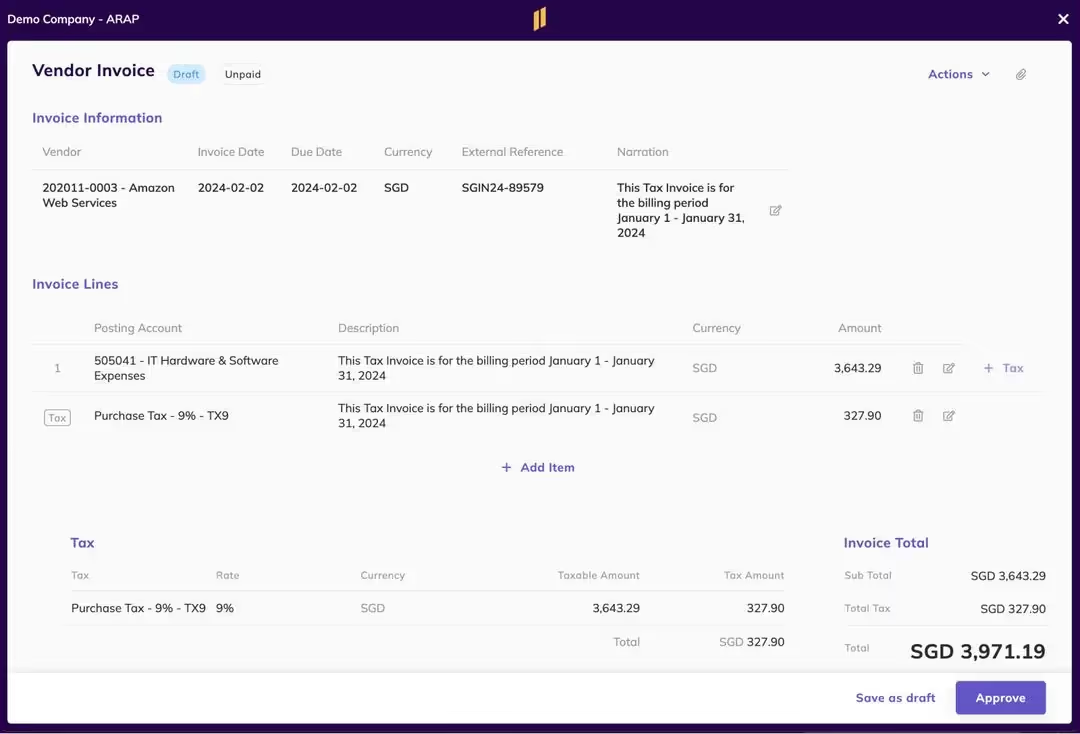
Users praise its ethical AI practices, scalability for firms of all sizes, and deep customization. Users highlight its transparent automation and ability to grow with businesses .
Xero is a cloud-based small-to-midsize business accounting software with automation.
It automates essential financial tasks such as invoicing, bank reconciliation, expense tracking, and payroll, offering real-time visibility into business finances.
It’s especially popular among startups and service-based companies due to its accessibility, scalability, and international support for multi-currency transactions.
Some features include:
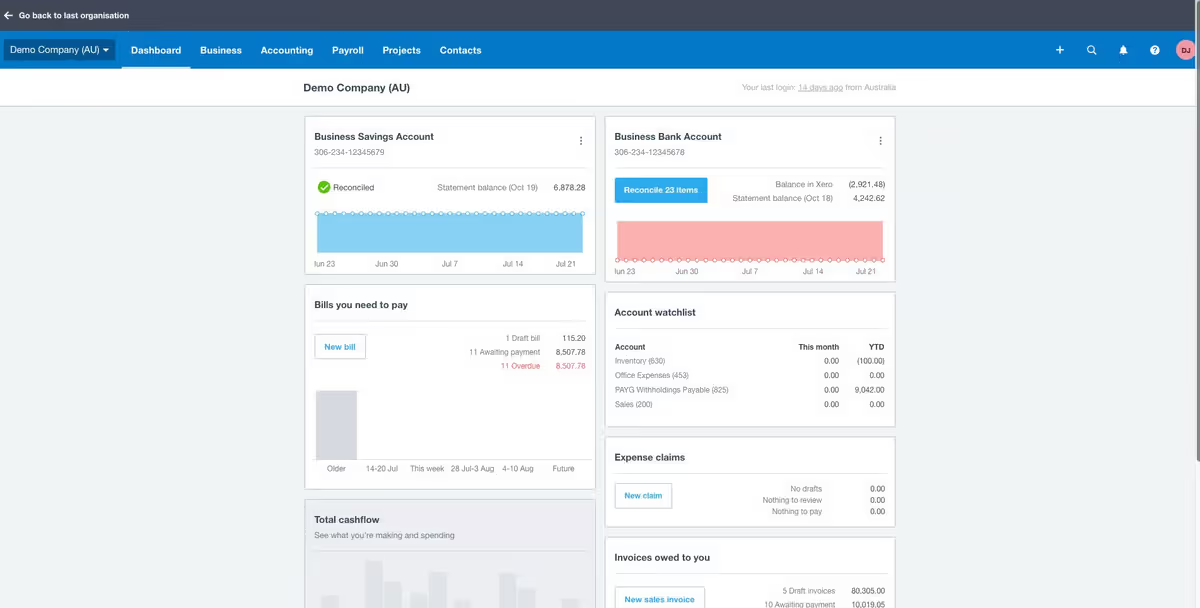
Source: G2
Xero is highly rated for its intuitive interface and international support. One user noted:
“Xero has transformed how we manage our finances. The multi‑currency feature is a lifesaver for our international operations.”
QuickBooks Online is a cloud-based accounting app with built-in AI features for SMBs.
It automates accounting tasks such as invoicing, expense tracking, bank reconciliation, payroll, and financial reporting.
QuickBooks Online provides real-time access to financial data and supports collaboration between business owners and accountants. Its scalability and wide adoption make it one of the most popular accounting platforms.
Some features include:
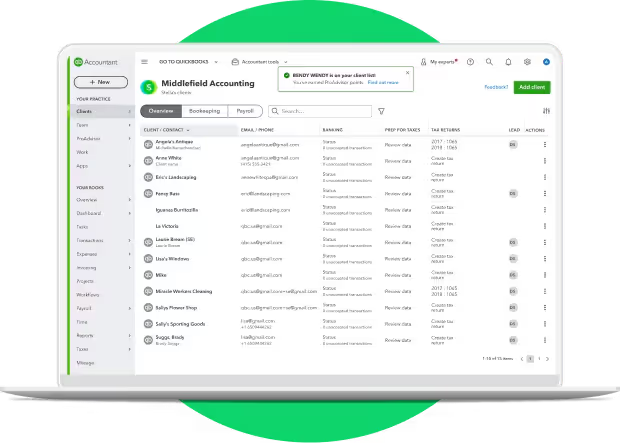
QuickBooks Online is widely used and user-friendly; however, some report stability issues and customer-service concerns. On Reddit, one accountant says:
“QuickBooks might appear user friendly… but it has a lot of bugs… auto mileage never works.”
Sage Intacct is a cloud-based mid-to-enterprise financial management & ERP solution.
It is known for its scalability and strong compliance capabilities. Sage Intacct is especially suited for organizations with complex financial structures, including nonprofits, software companies, and multi-location enterprises.
Some of the most popular features include:

Users who trust this tool include mid-to-large businesses who look for detailed reporting and multi-entity support. One Redditor remarks:
“SAGE… extremely detailed/more customizable reporting… better inventory functionality.”
Vic.ai is an AI-first accounts payable (AP) automation platform for mid-market and enterprise companies, especially in real estate, manufacturing, and retail.
It uses proprietary machine learning, trained on over a billion invoices, to automatically ingest, extract, match, and approve invoices.
It integrates with leading ERP platforms including QuickBooks, Xero, Oracle, Microsoft, and more, with an open API available to connect with any ERP system.
It offers many features such as:
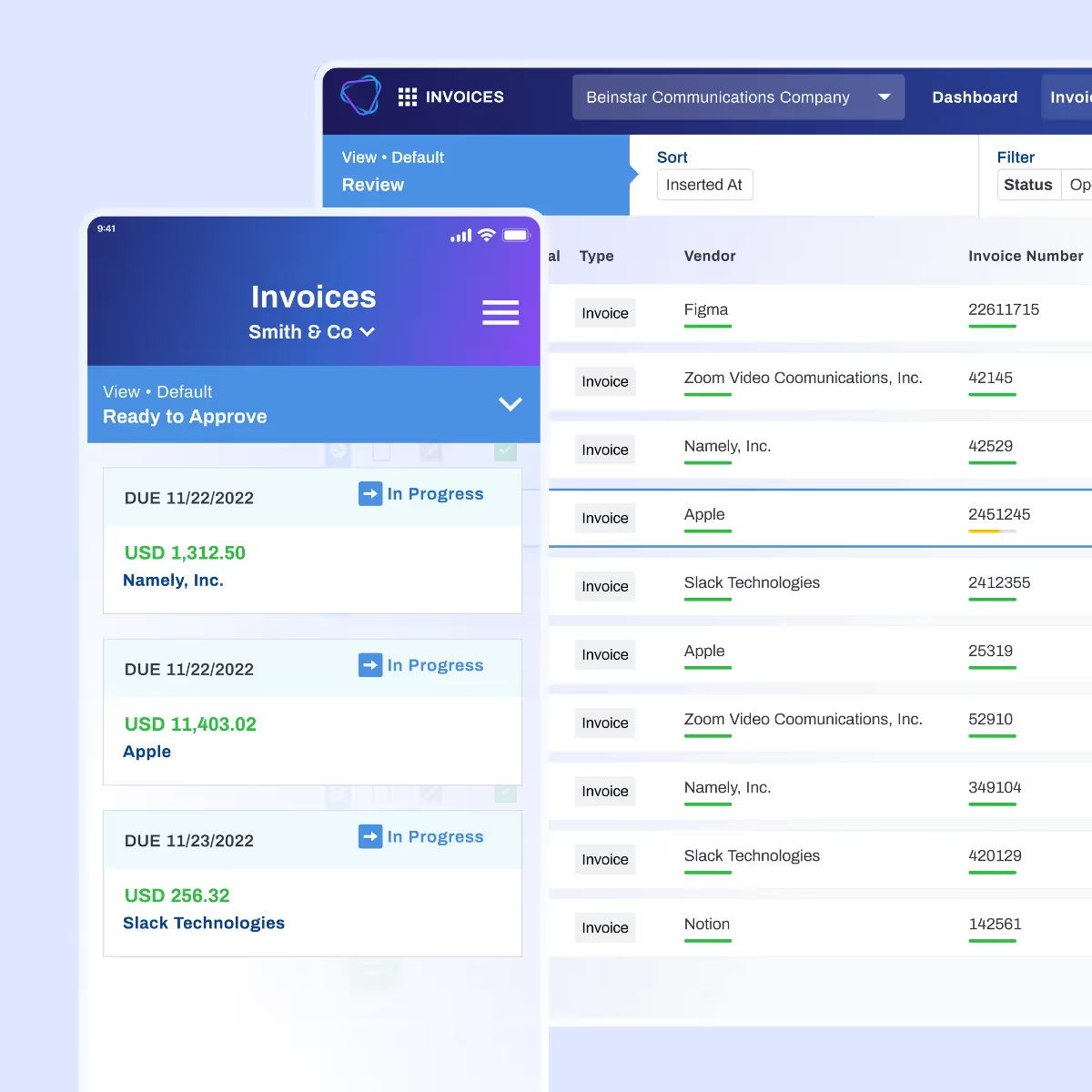
Users enjoy its speed and accuracy in AP automation, and its high-volume invoice handling and improved cash flow control. However, some users mention a steep learning curve .
Implementing automated accounting solutions in your business should be a must.
This will help you stay current and offer your clients a comprehensive service, where you can manage their finances, but also give them the best strategic advice based on accurate and realistic reports.
Eleven meets this demand and sets new benchmarks for accuracy, efficiency, and growth.
Start your test drive with Eleven now!
Automated accounting systems are software platforms that use AI and automation to handle financial tasks such as data entry, invoicing, bank reconciliation, and reporting. They reduce manual workload, minimize errors, and give businesses real-time visibility into their financial health.
The best automated accounting software depends on your firm's size, needs, and complexity. Key factors to consider include the level of automation offered, integration capabilities, scalability, security, and pricing.
We recommend defining your requirements clearly before evaluating tools, as the right choice will vary depending on whether you're a freelancer, a growing SMB, or a large enterprise managing complex, multi-entity finances.
A general ledger is the central record-keeping system for all of a company’s financial transactions.
It organizes data into accounts like assets, liabilities, income, and expenses to produce key financial statements.
The five main elements of the general ledger are assets, liabilities, equity, revenues, and expenses.
These categories form the foundation of a business’s financial reporting and reflect its overall financial health.
Yes, bookkeeping can be largely automated using software that records transactions, categorizes expenses, reconciles accounts, and generates reports.
Automation reduces errors, saves time, and keeps financial data up to date.
While many accounting tasks can be automated, like data entry, invoicing, and reconciliations, full automation is rare.
Human oversight is still essential for judgment-based tasks, compliance decisions, and strategic financial planning.
No, AI will not replace accountants but will transform their role.
Routine tasks will be handled by automation, allowing accountants to focus on analysis, advisory services, and high-level decision-making.
Related content


We are using cookies. Learn more.

%20(1).avif)
%20(1).avif)


